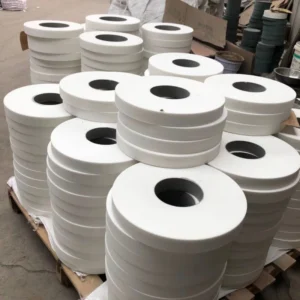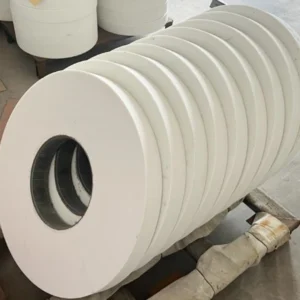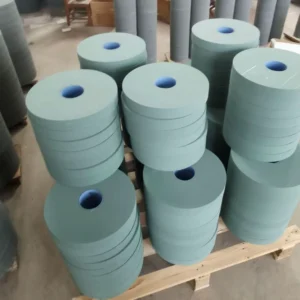
Vitrified Grinding Wheels for Precision Grinding: Technical Guide for Buyers
When selecting grinding wheels for precision machining, performance consistency and dimensional stability are often more important than initial cost. For this reason, vitrified grinding wheels remain the preferred choice for many industrial buyers, especially in automotive and mechanical grinding applications.
This guide explains how vitrified grinding wheels work, where they perform best, and what buyers should consider before placing an order.
What Makes a Vitrified Grinding Wheel Different?
A vitrified grinding wheel uses a ceramic-based bond that securely holds abrasive grains while maintaining controlled porosity. This structure provides a rigid wheel body with predictable wear behavior.
From a buyer’s perspective, this means:
- Stable wheel geometry throughout the grinding cycle
- Consistent cutting performance from the first piece to the last
- Reduced risk of profile loss or dimensional deviation
Compared with resin-bond wheels, vitrified wheels offer higher accuracy and longer dressing intervals, which directly impacts productivity.
How Vitrified Grinding Wheels Perform in Production
During grinding, the vitrified bond fractures gradually under controlled stress. As dull grains break away, new sharp abrasives are exposed. This self-renewing mechanism allows the wheel to maintain cutting efficiency without excessive loading.
At the same time, the porous structure improves coolant flow. As a result, heat dissipation is more efficient, surface burn is reduced, and workpiece integrity is preserved—an essential requirement in crankshaft and camshaft grinding.
Key Advantages for Industrial Buyers
1. Dimensional Accuracy
Vitrified grinding wheels maintain their shape under heavy grinding pressure, making them suitable for tight-tolerance components.
2. Process Stability
Because wear is uniform and predictable, production parameters remain stable, reducing adjustment frequency.
3. Long-Term Cost Efficiency
Although vitrified wheels may have a higher unit price, their longer service life and reduced scrap rate lower overall cost per part.
4. Easy Dressing and Conditioning
Vitrified wheels respond well to dressing, allowing operators to quickly restore cutting ability and profile accuracy.
Typical Applications in Automotive and Industrial Grinding
Vitrified grinding wheels are commonly specified for:
- Crankshaft grinding in engine manufacturing and remanufacturing
- Camshaft grinding requiring precise lobe geometry
- Cylinder head surface grinding
- Precision cylindrical and surface grinding operations
For workshops and factories handling hardened steel or cast iron components, vitrified wheels provide reliable performance across extended production runs.
Key Selection Factors Buyers Should Confirm
Before ordering a vitrified grinding wheel, buyers should clarify the following specifications:
- Wheel dimensions: outer diameter, thickness, and bore size
- Abrasive type: aluminum oxide, silicon carbide, or special blends
- Grit: based on material removal rate and surface finish requirement
- Hardness and structure: matched to machine power and workpiece material
- Application conditions: wet or dry grinding, machine type, and spindle speed
Providing accurate application details allows suppliers to recommend a wheel that delivers optimal performance rather than a generic solution.
Final Considerations for Procurement
Choosing the right vitrified grinding wheel is not just a technical decision—it is a productivity decision. A well-matched wheel improves grinding efficiency, reduces downtime, and ensures consistent quality.
For buyers sourcing vitrified grinding wheels for precision applications, working with an experienced manufacturer who understands your process conditions is essential for long-term reliability and cost control.
For more grinding wheel application visuals and industry insights, you can also follow us on Pinterest