Introduction
Shaft and cylindrical grinding play a critical role in precision machining industries such as automotive, aerospace, and heavy equipment manufacturing. Choosing the best grinding wheels for shaft and cylindrical grinding directly affects surface finish, dimensional accuracy, and production efficiency.
Therefore, understanding wheel selection is essential for achieving consistent and high-quality results.
What Is Shaft and Cylindrical Grinding?
Cylindrical grinding is used to machine the outer diameter of cylindrical or shaft-shaped workpieces. Typically, it requires tight tolerances, excellent roundness, and smooth surface finishes.
Moreover, shaft grinding often involves hardened steels, alloy steels, or stainless steels, which demand grinding wheels with stable cutting performance and controlled wear.
Key Factors When Choosing Grinding Wheels
To select the best grinding wheel, several technical factors must be considered.
1. Abrasive Type
The abrasive material determines cutting efficiency and wheel life.
- Aluminum Oxide (A / WA / PA)
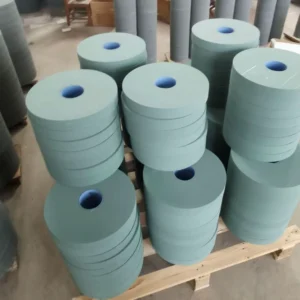
Ideal for carbon steel, alloy steel, and hardened shafts. It offers stable cutting and good self-sharpening performance. - CBN (Cubic Boron Nitride)
Best suited for hardened steels (HRC 55–65). Although more expensive, CBN wheels provide superior accuracy and extended service life.
Therefore, aluminum oxide wheels remain the most economical and widely used option for conventional cylindrical grinding.
2. Grit Size
Grit size influences surface finish and material removal rate.
- Coarse grit (36–46): Heavy stock removal
- Medium grit (54–60): General shaft grinding
- Fine grit (80–120): High-precision finishing
In most shaft grinding applications, grit 46–60 offers the best balance between efficiency and finish.
3. Wheel Hardness
Wheel hardness affects how quickly abrasive grains release during grinding.
- Soft wheels: For hard materials, prevent burning
- Medium hardness: Suitable for most cylindrical grinding tasks
- Hard wheels: For soft steels and stable grinding conditions
Consequently, selecting the correct hardness helps avoid glazing, burning, and excessive wheel wear.
4. Bond Type
The bond holds the abrasive grains together and controls wheel behavior.
- Vitrified bond (V)
Most recommended for shaft and cylindrical grinding due to excellent rigidity, thermal stability, and dressing performance.
In addition, vitrified grinding wheels maintain shape accuracy, making them ideal for CNC cylindrical grinding machines.
Recommended Grinding Wheel Specifications
For typical shaft grinding applications, the following specifications are commonly used:
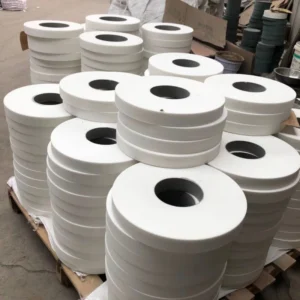
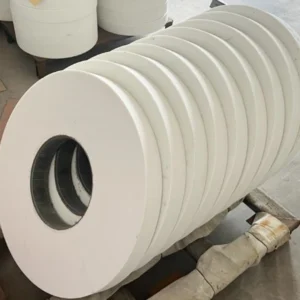
- Abrasive: White Aluminum Oxide (WA / 99A)
- Grit: 46 / 54 / 60
- Hardness: K–M
- Bond: Vitrified (V)
These specifications provide consistent performance across a wide range of shaft diameters and materials.
Advantages of High-Quality Grinding Wheels
Using the right grinding wheel delivers multiple benefits:
- Improved surface finish and roundness
- Reduced grinding burns and vibration
- Longer wheel life and fewer dressings
- Higher productivity and lower operating costs
As a result, investing in a well-matched grinding wheel significantly improves overall machining efficiency.
Conclusion
Selecting the best grinding wheels for shaft and cylindrical grinding requires careful consideration of abrasive type, grit size, hardness, and bond. By choosing the correct wheel specification, manufacturers can achieve high precision, stable performance, and cost-effective production.
If you are looking for customized vitrified grinding wheels for shaft grinding or CNC cylindrical grinding applications, professional technical support and tailored solutions are always recommended.