How Grinding Wheel Hardness Affects Surface Finish
Introduction
Surface finish is a critical factor in precision grinding. Manufacturers often focus on abrasive type, grit size, and machine parameters. However, grinding wheel hardness also plays an essential role in determining the final surface quality.
Grinding wheel hardness refers to the strength of the bond that holds abrasive grains in place. Therefore, the hardness directly influences how quickly abrasive grains break away during grinding.
In this article, we will explain how grinding wheel hardness affects surface finish, grinding efficiency, and wheel life, and how to choose the right hardness for different applications.
What Is Grinding Wheel Hardness?
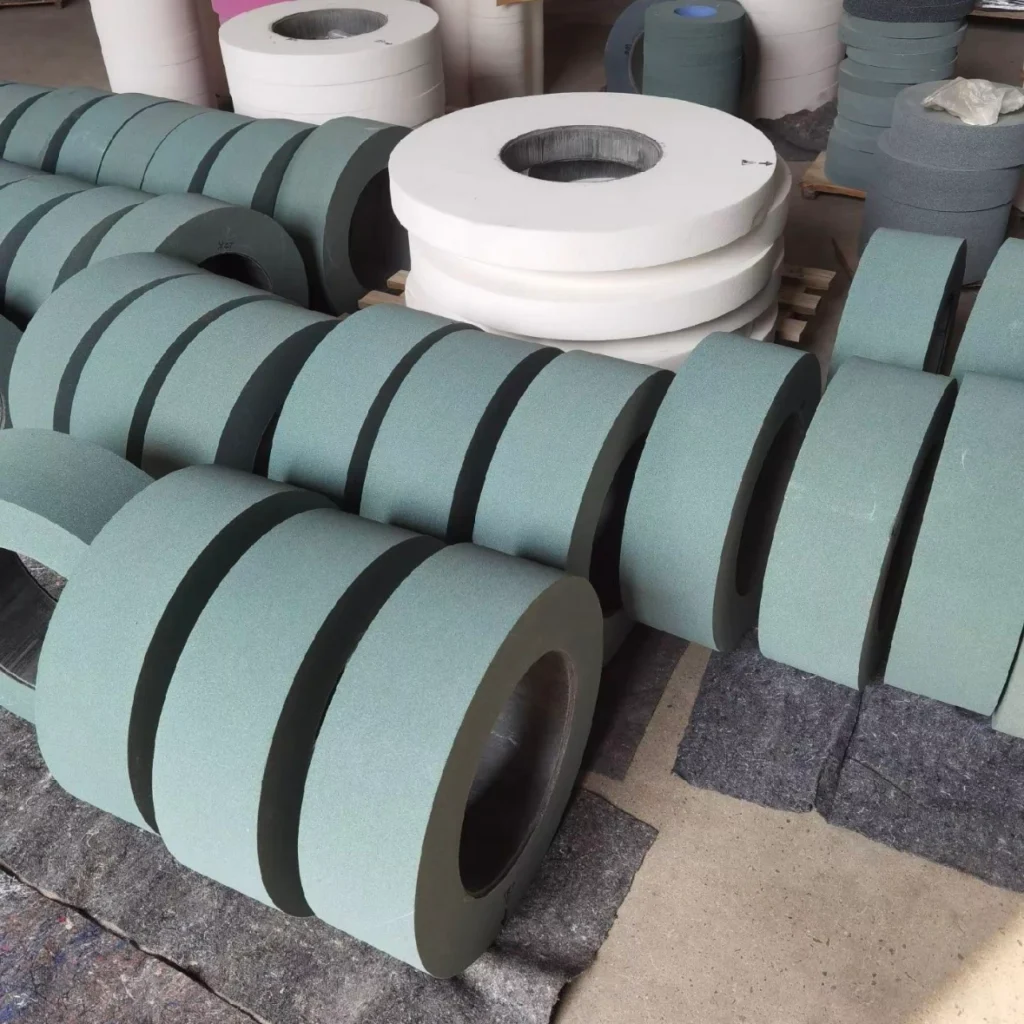
Grinding wheel hardness does not refer to the hardness of the abrasive grain itself. Instead, it describes how strongly the bond holds the abrasive particles.
Manufacturers classify grinding wheel hardness using letters, usually from A (very soft) to Z (very hard).
- Soft grinding wheels release abrasive grains easily.
- Hard grinding wheels hold abrasive grains longer.
As a result, the hardness level directly affects the grinding process and surface finish.
How Grinding Wheel Hardness Influences Surface Finish
1. Grain Release and Self-Sharpening
Soft grinding wheels allow abrasive grains to break away more easily. Consequently, new sharp grains constantly appear on the grinding surface.
This process is called self-sharpening. Because sharp grains cut more efficiently, soft wheels often produce cooler grinding conditions.
However, the wheel may wear faster.
On the other hand, hard grinding wheels retain grains longer. Therefore, dull grains may remain on the wheel surface, which can increase friction and heat.
As a result, the surface finish may become rougher if the wheel becomes dull.
2. Grinding Temperature and Workpiece Quality
Grinding temperature significantly affects surface finish. Excessive heat may cause burn marks, microcracks, or surface deformation.
Soft grinding wheels help reduce grinding temperature because dull grains break away quickly. Therefore, they often produce better surface finishes on hard materials.
However, hard grinding wheels generate more heat when grains become dull. Consequently, they may negatively affect surface quality if the grinding conditions are not optimized.
3. Material Removal Behavior
Grinding wheel hardness also influences the material removal mechanism.
Soft wheels cut aggressively because fresh grains constantly replace worn ones. As a result, they perform well in grinding hard materials such as hardened steel or tool steel.
In contrast, hard grinding wheels remove material more slowly. However, they maintain their shape longer, which makes them suitable for soft materials or precision form grinding.
Therefore, choosing the correct hardness helps achieve the desired balance between surface finish and wheel life.
Choosing the Right Grinding Wheel Hardness
Selecting the correct grinding wheel hardness depends on several factors.
Workpiece Material
Generally, the following rule applies:
- Hard materials → softer grinding wheel
- Soft materials → harder grinding wheel
For example, hardened steel usually requires a softer grinding wheel, while aluminum or soft steel may require a harder wheel.
Contact Area
The size of the grinding contact area also affects wheel selection.
A large contact area generates more heat. Therefore, softer wheels are often preferred.
In contrast, small contact areas allow the use of harder grinding wheels.
Machine Power and Speed
Machine power and grinding speed also influence grinding performance.
For example, high-speed grinding machines often require slightly harder wheels to maintain stability and wheel shape.
However, operators must still ensure adequate cooling to maintain good surface finish.
Practical Applications
Grinding wheel hardness selection varies across industries.
For example:
- Precision machining requires balanced hardness for smooth surface finish.
- Tool grinding often uses softer wheels for hardened materials.
- Automotive component grinding requires wheels that maintain dimensional accuracy.
- CNC grinding operations require wheels that provide consistent performance.
Therefore, understanding grinding wheel hardness helps improve both surface quality and machining efficiency.
Conclusion
Grinding wheel hardness is a key factor that directly affects surface finish, grinding temperature, and wheel life.
Soft wheels promote self-sharpening and reduce heat, which often improves surface finish on hard materials. However, hard wheels offer longer wheel life and better dimensional stability.
Therefore, manufacturers must carefully choose the appropriate grinding wheel hardness based on workpiece material, grinding conditions, and desired surface quality.
By selecting the correct grinding wheel, companies can significantly improve grinding performance, surface finish, and overall production efficiency.