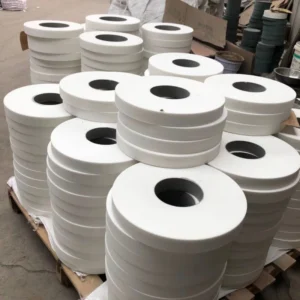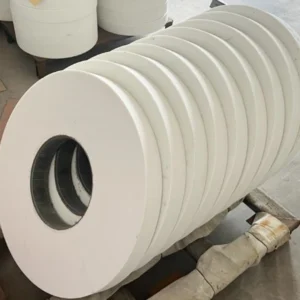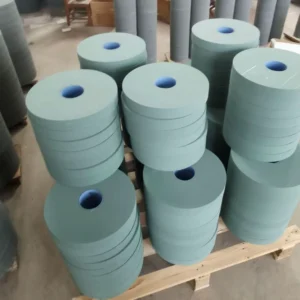
Grinding wheel performance depends heavily on the bonding system. Among all bond types, vitrified bond wheels and resin bond wheels dominate industrial grinding applications. However, many buyers still struggle to choose the right one.
In this guide, we clearly explain the differences between vitrified vs resin bond wheels, so you can confidently select the best solution for your grinding process.
1. What Is a Vitrified Bond Wheel?
A vitrified bond wheel uses ceramic bonding material. Manufacturers fire the bond at high temperatures to create a rigid, glass-like structure.
Because of this structure, vitrified wheels:
- Maintain excellent dimensional stability
- Provide high porosity for coolant flow
- Deliver precise grinding accuracy
- Offer longer service life in heavy-duty applications
Therefore, industries widely use vitrified wheels in precision grinding and large roll grinding operations.
👉 Learn more about Vitrified Grinding Wheels
2. What Is a Resin Bond Wheel?
A resin bond wheel uses synthetic resin as the bonding material. Manufacturers cure the resin under controlled heat and pressure.
Compared to vitrified wheels, resin bond wheels:
- Offer higher elasticity
- Absorb vibration effectively
- Produce smoother surface finishes
- Operate at higher cutting speeds
As a result, resin bond wheels perform exceptionally well in fine finishing, tool grinding, and crankshaft grinding.
👉 Explore our <a href=”/resin-bond-grinding-wheel”><strong>Resin Bond Grinding Wheels</strong></a>
3. Vitrified vs Resin Bond Wheels: Key Differences
| Feature | Vitrified Bond | Resin Bond |
|---|---|---|
| Structure | Rigid, brittle | Flexible, elastic |
| Heat Resistance | Excellent | Moderate |
| Surface Finish | Good | Excellent |
| Durability | Long life | Moderate |
| Shock Resistance | Lower | Higher |
| Speed Capability | Medium | High |
However, choosing between them depends on your grinding target, machine condition, and required surface finish.
4. When Should You Choose Vitrified Bond Wheels?
You should choose vitrified bond wheels if:
- You require high dimensional accuracy
- You grind steel rolls or large cylindrical parts
- You need stable structure under heavy load
- You want consistent performance in long production runs
In addition, vitrified wheels maintain better form retention, which improves grinding precision over time.
For example, many steel mills prefer vitrified wheels for roll grinding wheel because they ensure stability and longer dressing intervals.
5. When Should You Choose Resin Bond Wheels?
You should select resin bond wheels if:
- You focus on superior surface finish
- You grind crankshafts or automotive components
- Your machine operates at high speed
- You need better shock absorption
Because resin bonds absorb vibration effectively, they reduce chatter marks and improve surface smoothness.
Therefore, automotive and precision tool manufacturers often choose resin bond systems.
6. Cost & Efficiency Comparison
Although resin wheels often cost slightly less initially, vitrified wheels usually offer longer service life. As a result, vitrified wheels may provide better long-term cost efficiency in heavy-duty operations.
On the other hand, resin bond wheels reduce surface rework and polishing time. Consequently, they improve finishing efficiency in high-precision industries.
7. Final Verdict: Which Bond Type Is Better?
There is no universal “better” option.
- Choose vitrified bond wheels for stability, durability, and heavy grinding.
- Choose resin bond wheels for flexibility, smooth finish, and high-speed applications.
Ultimately, the best grinding wheel depends on your material, machine setup, and surface requirement.
If you are unsure which bond type fits your application, our technical team can recommend the ideal specification based on your grinding conditions.
👉 Contact us today to get expert advice on selecting the right grinding wheels.