Introduction
Crankshaft grinding is a critical process in engine rebuilding and maintenance. The grinding quality directly affects engine performance, service life, and reliability. However, various problems may occur during the grinding process, leading to poor surface finish, dimensional inaccuracies, or reduced wheel life.
In this blog, we discuss the most common crankshaft grinding problems and practical solutions to improve grinding efficiency and workpiece quality.
1. Grinding Burn on the Crankshaft Surface
Problem
Grinding burn appears as discoloration, blue marks, or thermal damage on the crankshaft surface. Excessive heat generation during grinding can alter the material properties and reduce component durability.
Possible Causes
- Grinding wheel hardness is too high
- Feed rate is excessive
- Insufficient coolant supply
- Grinding wheel is glazed or dull
Solutions
- Select a softer grinding wheel grade
- Reduce feed rate and grinding pressure
- Ensure adequate coolant flow
- Dress the grinding wheel regularly to maintain sharp cutting edges
2. Poor Surface Finish
Problem
The ground surface appears rough, scratched, or inconsistent, affecting the final quality of the crankshaft.
Possible Causes
- Incorrect abrasive grain size
- Worn grinding wheel
- Machine vibration
- Improper dressing conditions
Solutions
- Use a finer grit grinding wheel when required
- Dress the wheel properly before grinding
- Check machine spindle condition and balancing
- Ensure stable workpiece clamping
3. Chatter Marks and Vibration
Problem
Regular vibration patterns or chatter marks appear on the crankshaft journals after grinding.
Possible Causes
- Wheel imbalance
- Machine spindle wear
- Excessive grinding pressure
- Poor workpiece support
Solutions
- Balance the grinding wheel before installation
- Inspect machine spindle and bearings
- Reduce grinding force
- Improve workpiece support and alignment
4. Excessive Grinding Wheel Wear
Problem
The grinding wheel loses shape quickly, resulting in frequent dressing and increased production costs.
Possible Causes
- Wheel grade is too soft
- Incorrect wheel specification
- Excessive grinding pressure
- Unsuitable grinding parameters
Solutions
- Select a wheel specification suitable for crankshaft grinding
- Optimize grinding parameters
- Reduce unnecessary pressure
- Use high-quality vitrified bonded grinding wheels
5. Dimensional Inaccuracy
Problem
The crankshaft journal diameter fails to meet required tolerances after grinding.
Possible Causes
- Thermal expansion
- Machine alignment issues
- Improper measurement methods
- Grinding wheel wear
Solutions
- Maintain stable coolant conditions
- Verify machine alignment regularly
- Measure dimensions correctly during grinding
- Dress the wheel periodically
Choosing the Right Crankshaft Grinding Wheel
Selecting the correct grinding wheel is essential for achieving consistent grinding results. Important factors include:
- Abrasive type
- Grit size
- Grade hardness
- Structure
- Bond type
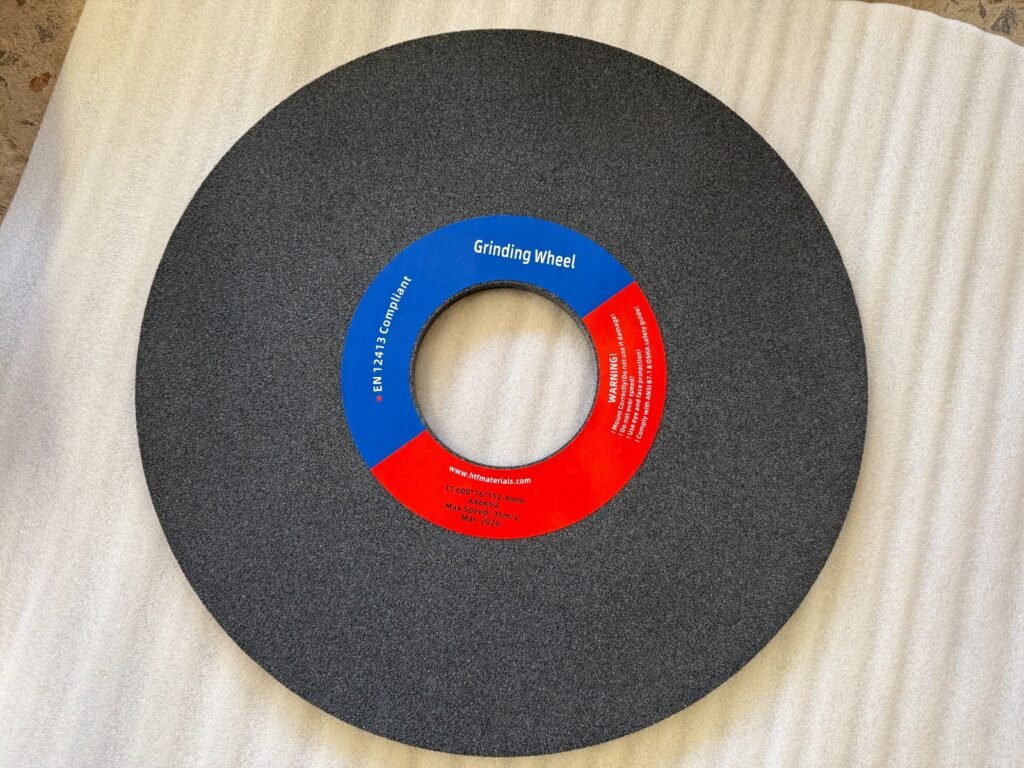
For engine rebuilding workshops and crankshaft repair applications, vitrified bonded grinding wheels with optimized abrasive combinations can provide excellent cutting performance, dimensional accuracy, and wheel life.
Conclusion
Grinding burn, poor surface finish, chatter marks, excessive wheel wear, and dimensional inaccuracies are among the most common challenges in crankshaft grinding. Understanding their causes and applying the correct solutions can significantly improve grinding efficiency and workpiece quality.
Using the proper crankshaft grinding wheel, maintaining dressing practices, and optimizing grinding parameters are key factors in achieving reliable and consistent results.
For professional crankshaft grinding applications, HTF Materials supplies customized crankshaft grinding wheels.