What Is Grinding Wheel Structure?
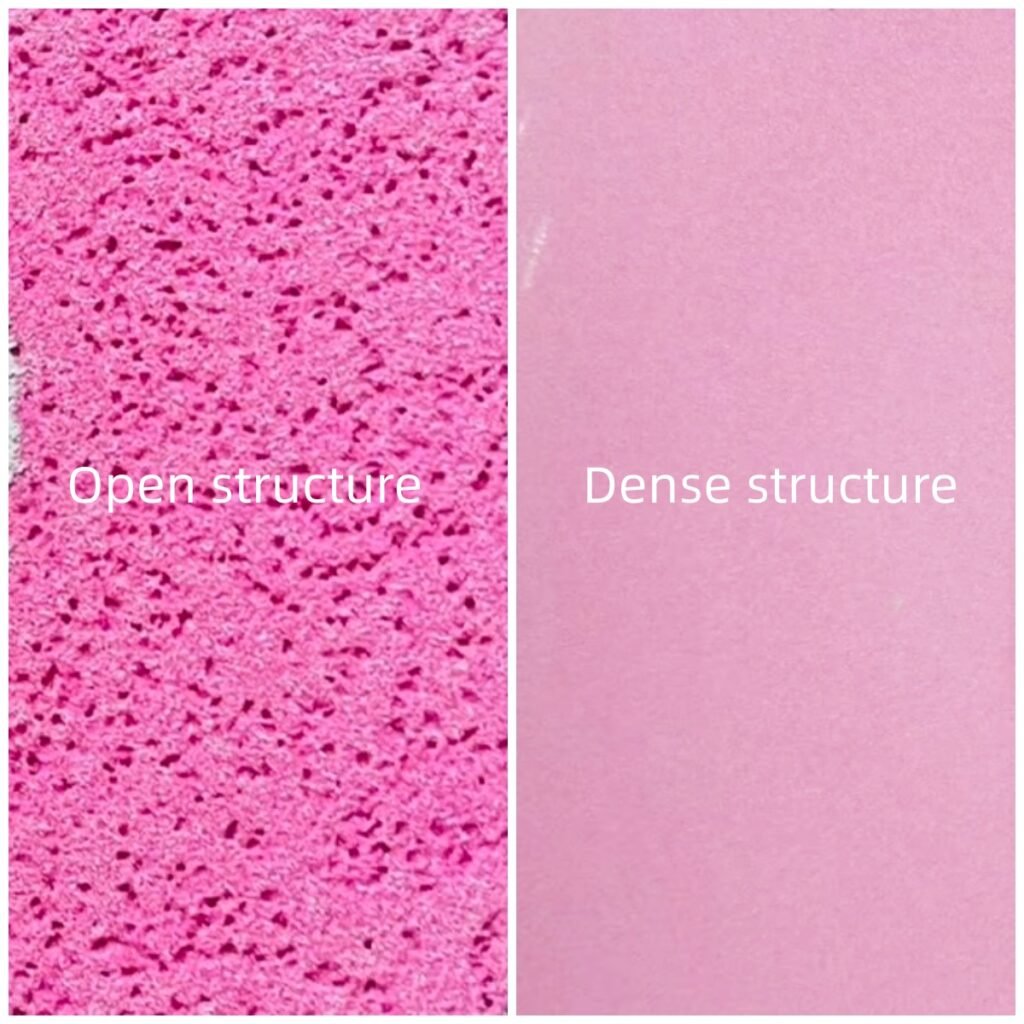
Grinding wheel structure refers to the spacing relationship between abrasive grains, bond material, and pores inside the grinding wheel. In simple terms, it describes how densely or openly the abrasive grains are arranged.
The structure of a grinding wheel directly affects grinding performance, including chip removal, heat dissipation, cutting ability, surface finish, and wheel life.
Grinding wheel structures are usually classified from dense structure to open structure.
Main Components of Grinding Wheel Structure
A grinding wheel consists of three basic elements:
- Abrasive Grit– Responsible for cutting and grinding.
- Bond– Holds the abrasive grains together.
- Pores (Voids) – Provide chip space and cooling channels.
The proportion of these elements determines whether the wheel has a dense or open structure.
Dense Structure Grinding Wheels
Dense structure wheels contain more abrasive grains and fewer pores.
Advantages
- Better surface finish
- Higher dimensional accuracy
- Stronger grain holding force
- Longer wheel life in certain applications
Applications
Dense structure grinding wheels are commonly used for:
- Precision grinding
- Fine surface finishing
- Hard materials with light grinding loads
- Tool and cutter grinding
Limitations
Because there are fewer pores, heat and chips may accumulate more easily during heavy grinding operations.
Open Structure Grinding Wheels
Open structure wheels contain larger pore spaces and fewer abrasive grains.
Advantages
- Better chip clearance
- Improved heat dissipation
- Reduced grinding burn
- Sharper cutting action
Applications
Open structure grinding wheels are ideal for:
- Heavy-duty grinding
- Stainless steel grinding
- Soft and gummy materials
- High material removal operations
- Crankshaft and cylindrical grinding
Limitations
Open structure wheels may wear faster and provide a slightly rougher surface finish compared to dense structures.
How to Choose the Right Grinding Wheel Structure
Selecting the correct structure depends on several factors:
| Grinding Condition | Recommended Structure |
|---|---|
| Fine finishing | Dense structure |
| Heavy stock removal | Open structure |
| Heat-sensitive materials | Open structure |
| Precision dimensional control | Dense structure |
| Stainless steel grinding | Open structure |
A suitable structure can improve grinding efficiency, reduce wheel loading, and extend wheel service life.
Grinding Wheel Structure and Grinding Performance
The wheel structure influences several important grinding results:
1. Heat Generation
Open structures allow coolant and airflow to enter more easily, reducing grinding temperature.
2. Chip Removal
Larger pores help remove chips efficiently and prevent wheel loading.
3. Surface Finish
Dense structures usually provide smoother surface finishes.
4. Wheel Wear
Open structures cut more aggressively but may wear faster under some conditions.
Conclusion
Grinding wheel structure is one of the key factors in grinding performance. Understanding the difference between dense and open structures helps manufacturers choose the right wheel for specific applications.
Whether the goal is precision finishing or heavy-duty material removal, selecting the proper grinding wheel structure can improve productivity, surface quality, and overall grinding efficiency.
At HTF Materials, we supply vitrified grinding wheels for crankshaft grinding, cylindrical grinding, surface grinding, and precision industrial applications. Customized structures are available based on your grinding requirements.